Head, Managed
Water pumping and distribution network engineered to serve a Kwara State community.
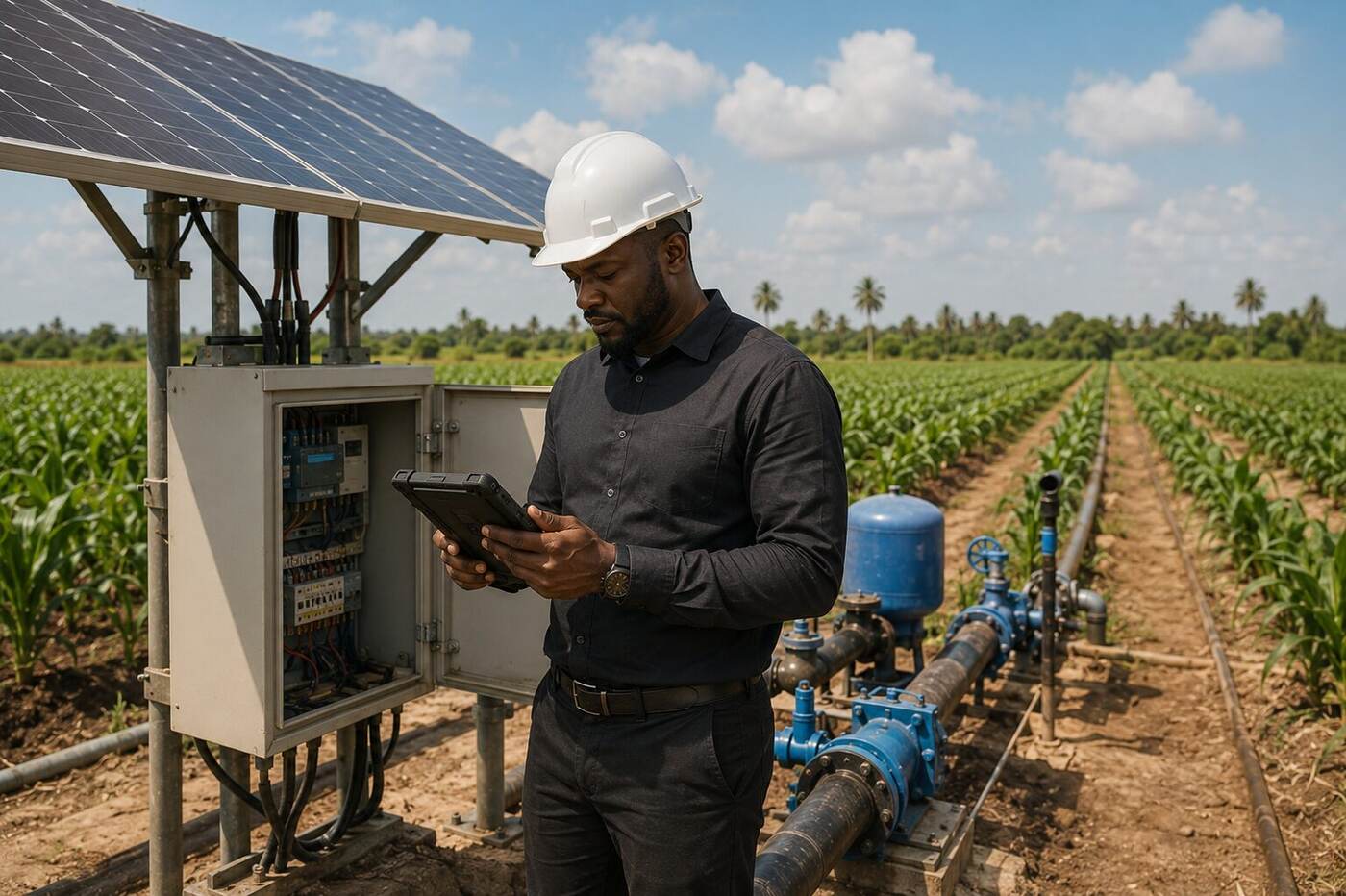
A community of roughly 6,200 people relied on a single hand-pump borehole and hours of daily walking to a river for a second water source, with no distribution network to bring water closer to where people actually lived.
Rolling terrain with a natural high point suited to a gravity-fed elevated storage tank.
Strong, consistent solar resource, making solar pumping viable without battery storage during daylight hours.
No grid electricity within economical reach; a single functioning hand-pump borehole.
No ongoing electricity budget for pumping — the system had to run on captured solar energy alone.
Deliver piped water to distribution points across the community without a recurring electricity cost, using the existing borehole as the source.
Daniel paired a solar-powered submersible pump with an elevated storage tank on the site's high ground, so the system pumps to storage during daylight and distributes by gravity around the clock — removing the need for batteries or continuous power entirely.
Specification.
| Pump | Solar submersible, 5.5 kW |
| Solar array | 7.2 kWp, direct-coupled |
| Storage tank | 60,000 L elevated steel tank |
| Static head | 28 m to tank base |
| Distribution network | 4,100 m HDPE pipe, 6 tap stands |
| Design output | 32,000 L/day |
| Population served | ~6,200 |
On site.
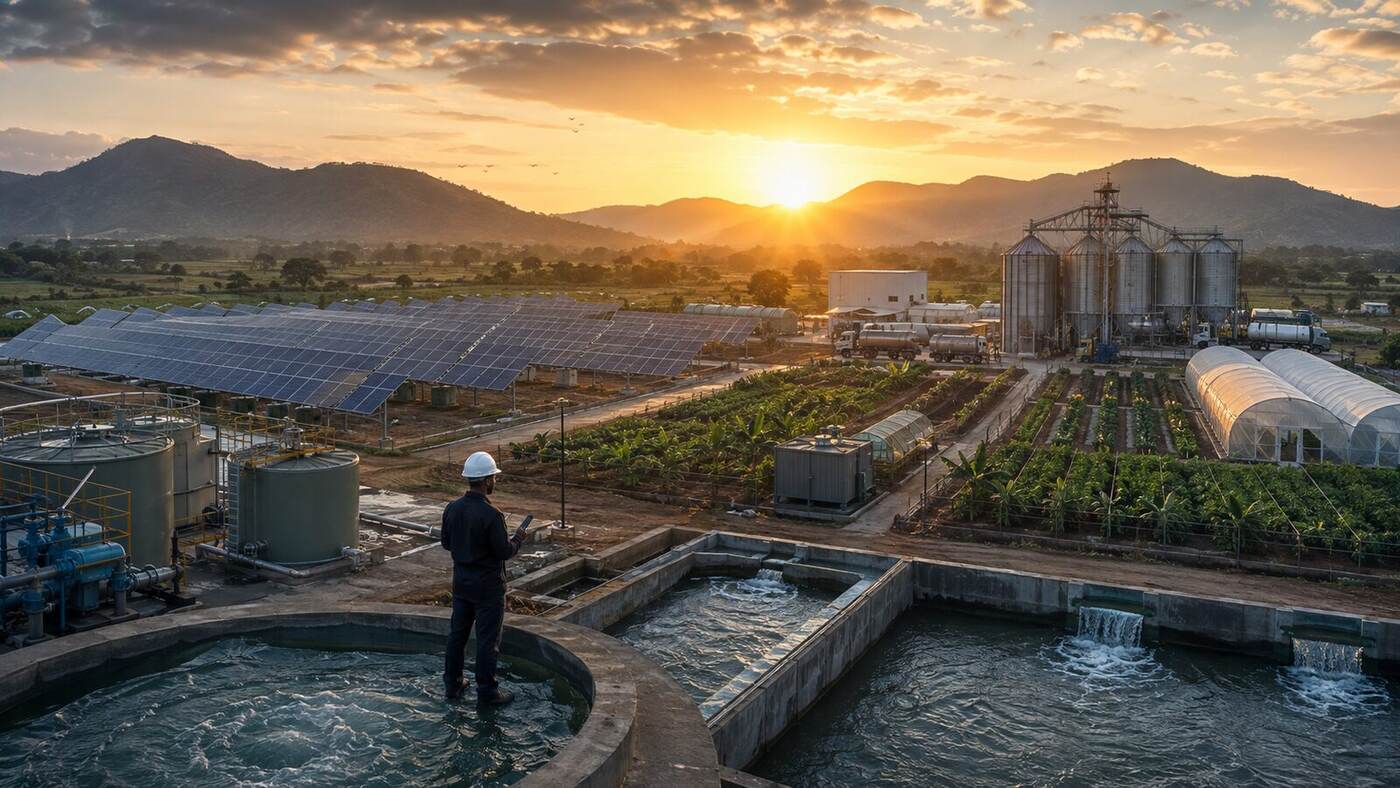
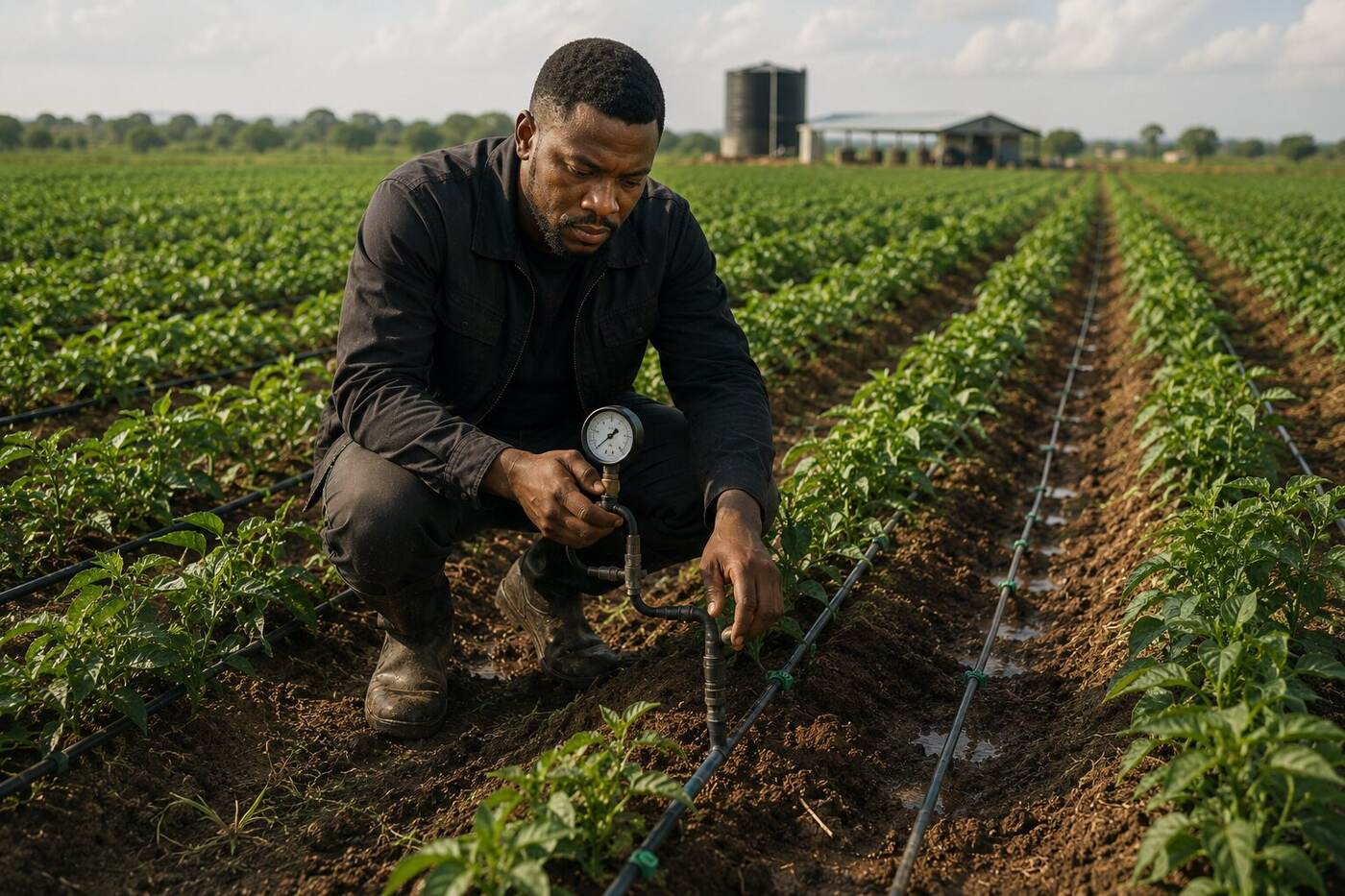
The elevated tank's first proposed site — the highest point on the community's land — sat on soil with poor bearing capacity for the tank's full loaded weight. The tank was relocated to a slightly lower but geotechnically sound position, and the distribution network's pipe sizing was recalculated to compensate for the small reduction in available head.
Measured outcomes.
The best site for a design on paper isn't always the best site for the ground underneath it — a geotechnical check early saves a relocation late.